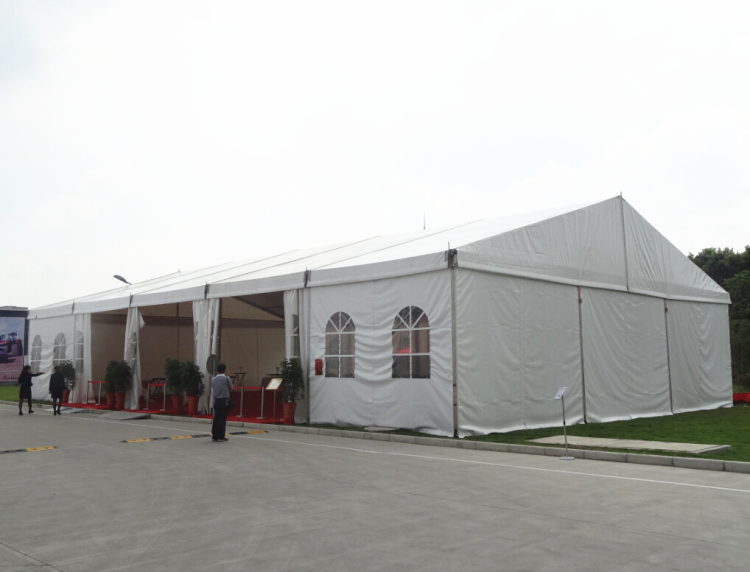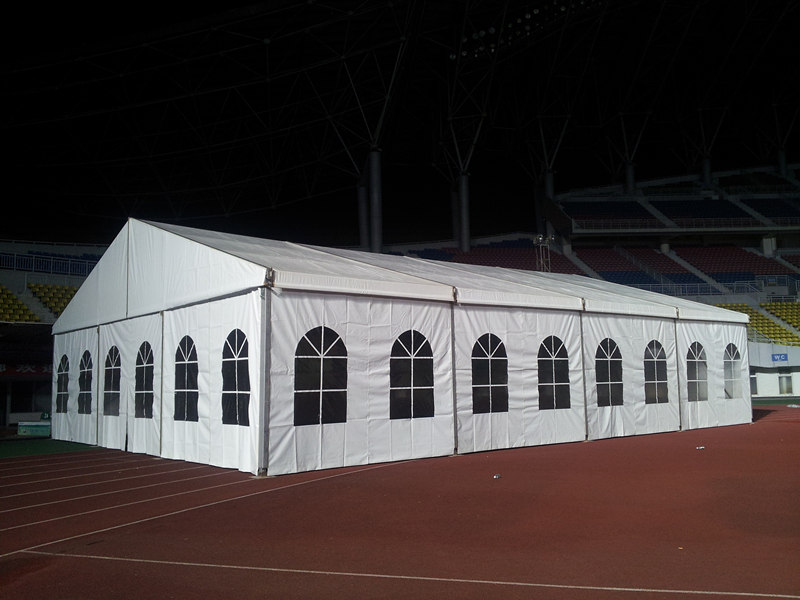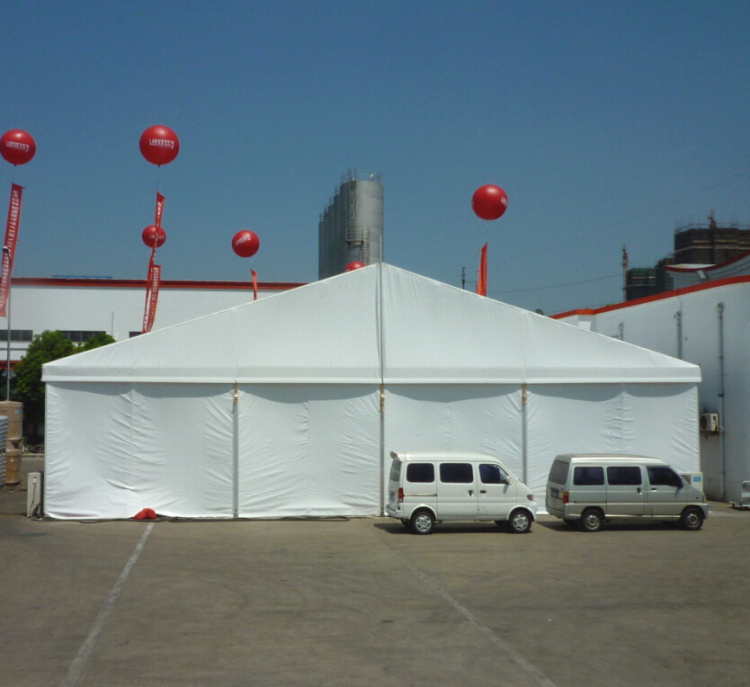


How to Choose the Right Large Storage Tent for Your Needs
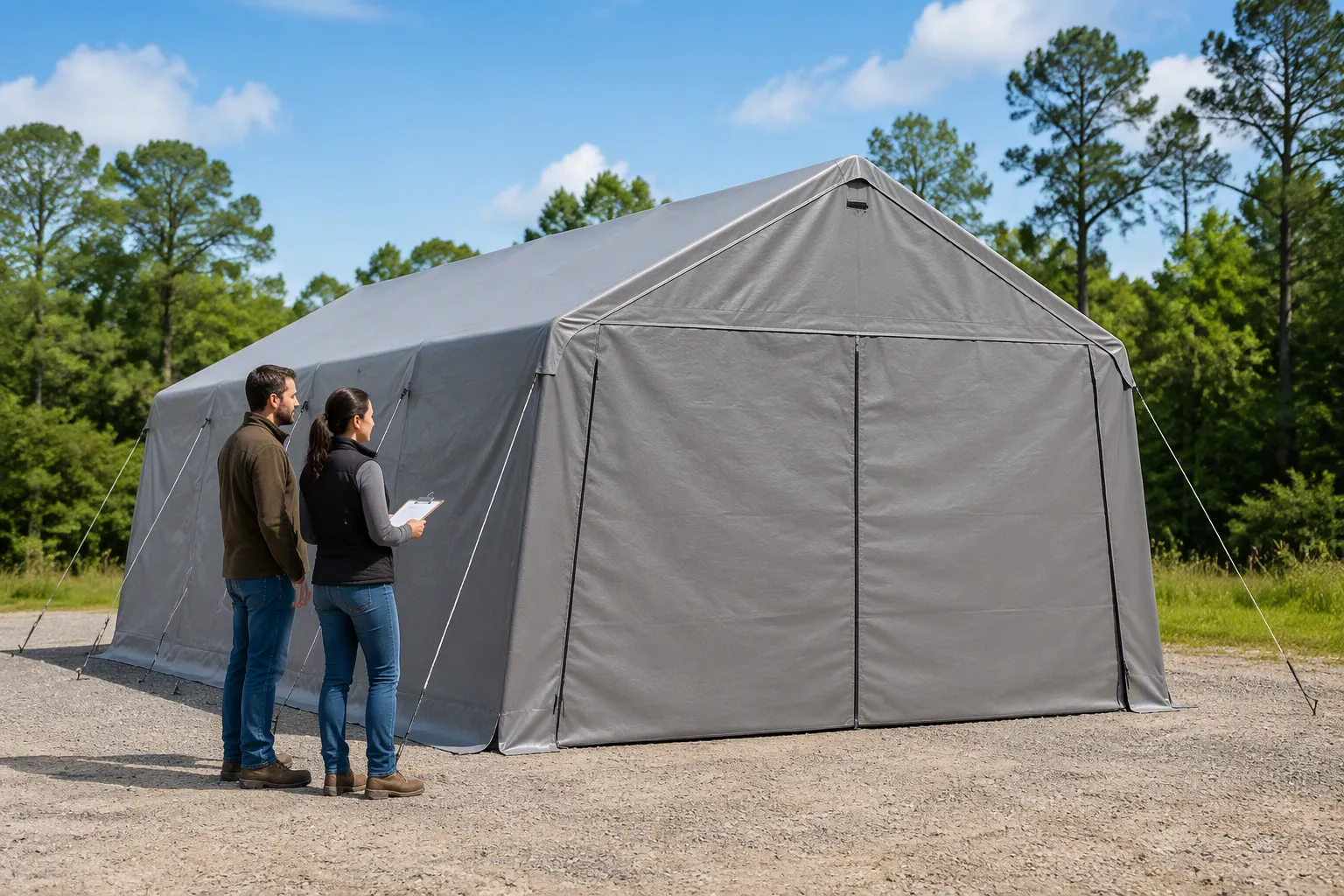
Garages, yards, and warehouses fill up fast. Equipment, inventory, and seasonal goods pile into spaces never meant to hold them. A large storage tent offers a practical answer at a fraction of the cost of new construction.
The real question is simpler than it sounds: which shelter fits your situation? The path runs through five steps. Define your needs and budget first. Study the environment next. Then size the shelter, compare fabric and frame options, and plan setup and accessories.
Each step builds on the one before it. Follow them in order, and the right tent becomes an obvious choice rather than a guess.
Key Takeaways
Define what you will store and set a realistic budget first.
Match the warehouse tent to your weather, terrain, and site conditions.
Calculate the right clear span and plan for future growth.
Compare PVC fabric coatings and aluminum frame options to balance cost and durability.
Plan setup, heavy-duty anchoring, and accessories for safety and logistics.
Start with Your Large Storage Tent Needs
Define What You Are Storing
The first decision is the contents. A large storage tent shelters many kinds of goods, and the inventory shapes every later choice. Household items, camping gear, and gardening tools suit compact models. Construction materials, vehicles, and heavy machinery demand open, column-free clear span layouts. The table below shows typical pairings by clear span width.
Tent Span (Width) | Typical Storage Use |
|---|---|
10m (33ft) | Tools, small equipment, seasonal overflow |
15m (49ft) | Building materials, farm machinery, medium inventory |
20m (66ft) | Palletized goods, standard forklift aisles, distribution centers |
30m (98ft) | Heavy machinery, large-scale logistics, vehicle storage |
40m (131ft) | Industrial-grade temporary warehouses, port yards, bulk commodities |
* Note: The length of a clear-span warehouse tent is fully customizable and can be extended indefinitely in 3m or 5m bays.
Duration of use matters just as much. A short-term need, such as seasonal overflow, favors a shelter that goes up and comes down quickly. A semi-permanent need calls for a structure built to stay put through many seasons. The tent is designed for industrial, commercial, and logistics applications, and it installs and dismantles easily as needs change. That flexibility serves a business staging inventory for one season and a fairground storing equipment the next.
Set a Realistic Budget
Budget planning starts with an honest scope. Commercial storage tents typically range from $1,000 to over $20,000, depending on span, materials, and customization. A medium commercial project of roughly 200 square meters often lands between $10,000 and $30,000 in the United States. Material choice drives much of the spread. Heavy-duty PVC tarpaulin runs about $10 to $30 per square meter, while high-gloss PVDF coatings cost slightly more. Frame selection adds another layer, with extruded aluminum alloy frames costing more upfront but saving on maintenance compared to painted steel.
Set the budget against the purpose of the shelter, not against a headline price. A cheap option that fails to protect inventory costs more over time. For large or specialized structures, request an exact quote from the manufacturer before committing.
Match the Right Shelter for Your Needs to the Environment
Weather and Climate Factors
A durable, stable tent is built with an extruded aluminum alloy framework and a waterproof PVC cover. These materials support structural integrity under demanding conditions. The environment in which your shelter will be used dictates the loads the structure must resist.
Wind, snow, and rain each place distinct demands on a shelter. The table below summarizes how each load affects material behavior and anchoring.
Weather Load | Material Behavior | Frame and Design Response | Anchoring and Maintenance |
|---|---|---|---|
Rain | High-density PVC weaves shed rain without degrading | Sealed vinyl floor; steep roof pitch sheds precipitation faster | Ensure perimeter gutters are clear |
Wind | Tensioned fabric reduces flapping and stress points | Aluminum profiles flex under gusts; aerodynamic profiles reduce drag | Stake every anchor point; keep guy lines taut |
Snow | Wet snow can be roughly three times heavier than dry snow | Steep roof angles help snow slide off; reinforced rafters distribute load | Monitor roof load; use internal heating if necessary |
Waterproofing and weather protection deserve early attention. Tensioned vinyl tops and corrosion-resistant frames handle rain and pooling water. Reinforced aluminum frames and high-tensile fabric resist wind uplift. Snow-load frames and heated interiors suit cold regions. Proactive maintenance, including regular snow removal and anchor checks, preserves the structure through every season.
Terrain and Site Conditions
Ground conditions determine the anchoring method and, in turn, the type of shelter you can safely install. Gravel and dirt accept auger-style ground anchors that screw deep into soil. Concrete and asphalt require wedge anchors or expansion bolts drilled into the paved surface. Grass and soft ground call for earth anchors with heavy-duty straps, driven at an angle for maximum resistance.
Hard surfaces without staking options demand ballast. Weighted footplates, water barrels, concrete blocks, and sandbags all serve this purpose. Sand setups rely on sandbags strapped to the frame and evenly distributed. Match the anchor to the ground, and the shelter holds. The right warehouse shelter balances size, materials, and site conditions into one coherent choice.
Determine the Size of the Shelter
Calculate Size and Capacity
Sizing begins with the goods themselves. Measure the footprint of each item, then multiply by the quantity you expect to hold. Machinery and vehicles need generous clearances around them for doors, mirrors, and turning arcs. Stackable goods reward height, so confirm the usable eave height before assuming a smaller floor plan will do. A simple check works well: total floor area needed = item footprint × quantity, plus a working margin for movement. Keep the margin qualitative at first, then refine it once you know your access routes.
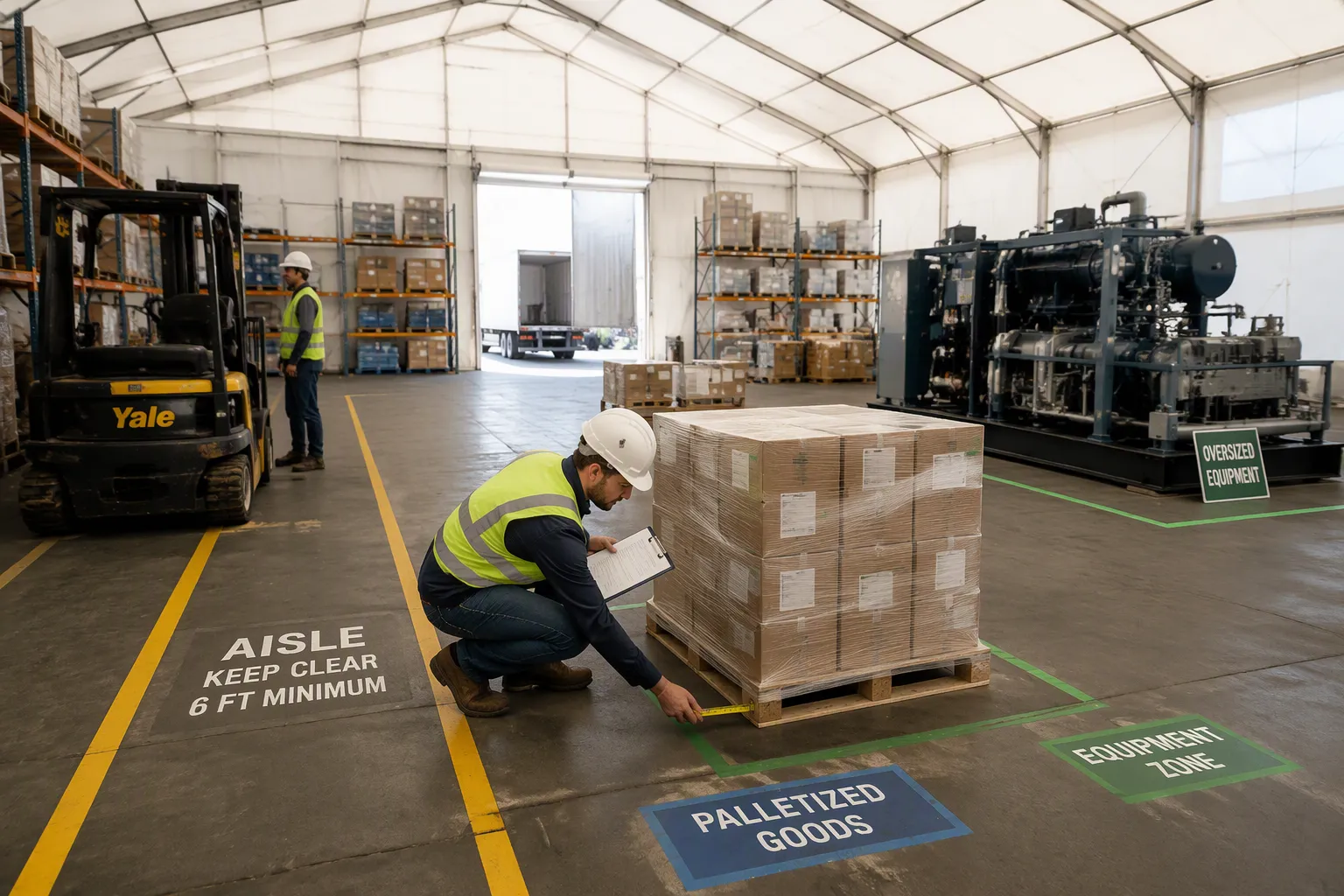
The size of the shelter should follow the load, not the other way around. Under-sizing forces double-handling and blocks aisles. Over-sizing raises cost without adding protection. Customizable size, layout, and features let you tailor the tent to specific requirements, so match the configuration to the cargo rather than accepting a stock dimension. For a mixed inventory, sketch zones on paper: one for palletized goods, one for oversized equipment, one for staging. That sketch becomes the brief you hand to a supplier.
Plan Access and Future Growth
Access planning protects tent capacity from being wasted. Main aisles must be wide enough to support safe forklift operation and staff movement. Emergency exits require clear, unobstructed paths for rapid evacuation. Loading docks and roll-up doors need dedicated approach routes. Space should be allocated for staging zones, racking layouts, and turning radii for heavy machinery. Pathways between storage racks and amenities must be wide and clear to prevent bottlenecks and ensure smooth logistics flow.
For equipment traffic, verify the route in sequence. Obtain turning and stacking aisle dimensions from the forklift manufacturer, since requirements vary by vehicle type and load size. Confirm the loaded forklift passes through the cargo opening and reaches the central route without unsuitable turning. Confirm it can approach, lift, place, and retrieve loads with required clearances. Confirm it can leave without blocking other vehicles or being trapped by staged pallets. Single-entrance layouts need a wider shared route, a designated waiting position, or an alternative traffic arrangement.
Future growth deserves the same attention. The number of people handling goods grows with volume, and larger tents absorb that growth more gracefully than crowded small ones. The right tent size leaves room for a second racking row or a wider turning circle. The size of the shelter you choose today should still serve the inventory you expect next year.
Compare Fabric and Frame Options
Fabric Durability and Protection
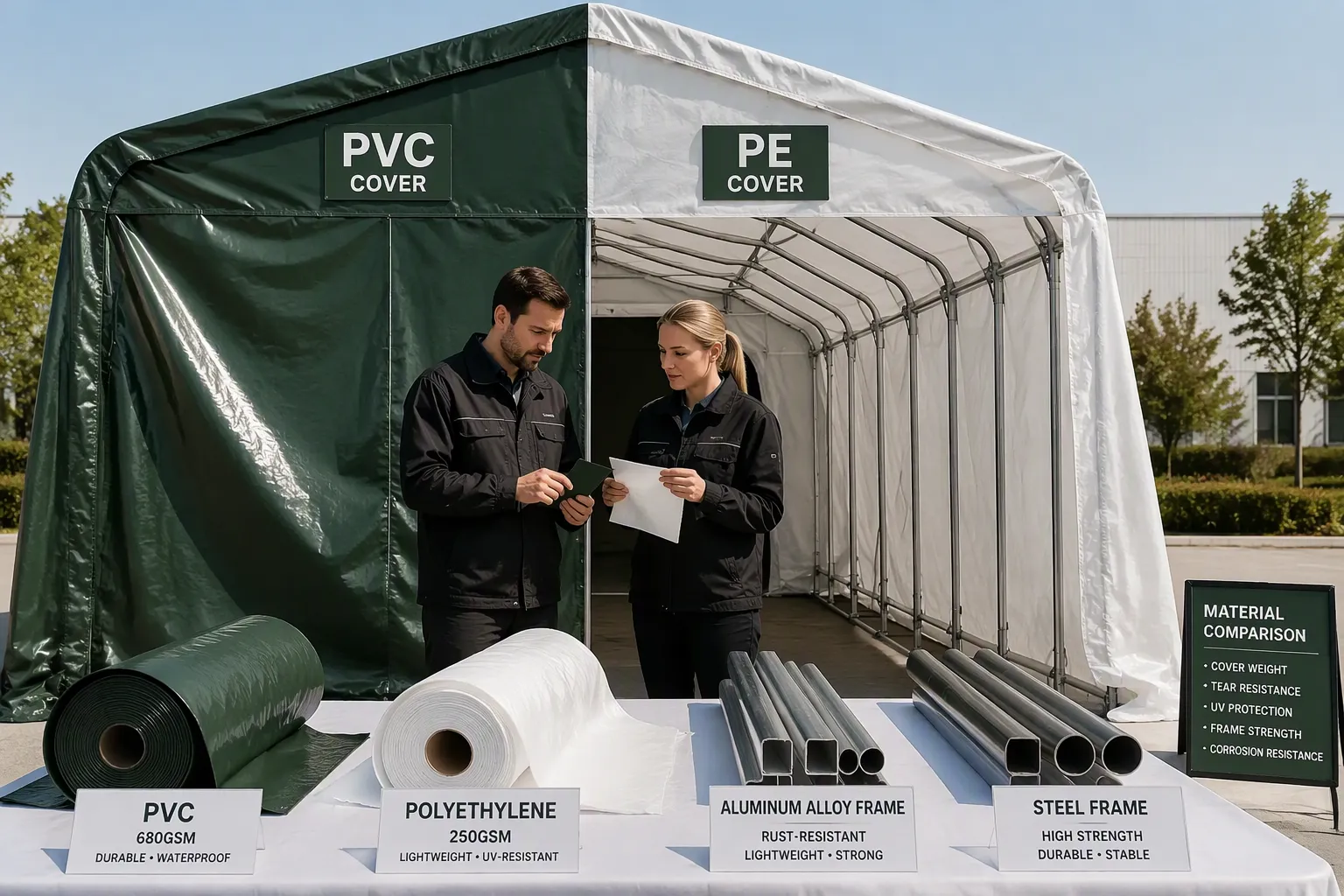
The cover is the first line of defense for everything inside a large storage tent. Heavy-duty PVC fabrics represent the industry standard, but they differ sharply in service life and protection level based on their coating and weight.
Property | Standard PVC (650-850g/sqm) | PVDF / High-Gloss PVC (900g/sqm+) |
|---|---|---|
Durability (service life) | 8–12 years | 15–20+ years |
UV & Weather Resistance | Excellent | Superior (PVDF coating reflects UV) |
Self-Cleaning Ability | Good | Excellent (dust washes off with rain) |
Flame Retardancy | B1 / M2 Certified | B1 / M2 Certified |
Best Use Case | Standard warehouse, 3-5 year projects | Long-term industrial hubs, harsh climates |
Standard PVC delivers strong weather resistance, tear resistance, and abrasion resistance. PVDF and high-gloss coatings suit long-term, heavy-duty use, offering superior self-cleaning properties that keep the warehouse looking professional. Choosing the appropriate fabric for your shelter comes down to exposure time. A semi-permanent structure facing years of sun and rain rewards PVDF. A temporary 2-year deployment may accept standard PVC and save money.
Cover longevity also tracks usage intensity. Light storage use yields up to 12 years from a good PVC cover, while industrial use might see 5–8 years. Waterproofing holds up well across that span, and PVC covers resist UV exposure throughout. A breathable design supports good ventilation, which limits condensation and protects stored goods. Together, these properties deliver comfort, durability, and safety for the contents.
Frame Type and Stability
Aluminum frame structural integrity governs safety under load. Extruded aluminum alloy profiles combined with hot-dip galvanized steel connectors bring distinct strengths to industrial applications.
Feature | Extruded Aluminum Alloy (6061-T6 / 6082-T6) | Hot-Dip Galvanized Steel Connectors |
|---|---|---|
Primary Function | Main structural profiles (rafters, columns) | Joint plates, base plates, cross braces |
Corrosion Resistance | Excellent (natural oxide layer) | Superior (thick zinc coating prevents rust) |
Structural Rigidity | High (supports clear spans up to 60m) | Extreme (ensures joints do not fail under stress) |
Maintenance | Minimal | Minimal (no painting required) |
The structural framework relies heavily on extruded aluminum alloy profiles for the main spans, combined with hot-dip galvanized steel connectors. Aluminum wins on the strength-to-weight ratio and corrosion resistance, requiring almost no upkeep even in coastal areas. The hot-dip galvanized steel joints ensure maximum structural rigidity at connection points, allowing the clear-span structure to withstand heavy snow loads and wind speeds up to 120 km/h. Whichever configuration you select, weather protection depends on proper anchoring and placement.
Plan Tent Setup and Accessories
Installation Effort and Anchoring
Installation effort depends on the shelter type and the site. While smaller units can be assembled manually, large-span warehouse tents (e.g., 20m to 40m clear span) require cranes and forklifts for safe and efficient erection. A professional crew completes the work in a predictable sequence. Ease of setup improves when the ground is prepared first. Clear the footprint, level the surface, and confirm the anchor points before the frame goes up.
Anchoring must match the ground beneath the tent. The table below pairs common site conditions with suitable hardware.
Site Condition | Recommended Anchoring Method |
|---|---|
Gravel or dirt | Auger-style ground anchors (900mm+) |
Concrete or asphalt | Wedge anchors or expansion bolts |
Grass or soft ground | Earth anchors with heavy-duty straps |
Hard surfaces (no staking) | Weighted footplates, concrete ballast blocks |
On natural grass, drive stakes at a 45-degree angle away from the unit. Wet grass calls for hybrid auger stakes plus sandbags. Concrete anchoring suits large clear span tents because it holds with fewer tie-down points and keeps the floor clear. Where drilling is prohibited, rated concrete ballast blocks sized to the tent and wind load are the accepted alternative. Artificial turf accepts sandbags only, since stakes damage the backing.
Customization Options
A storage tent can be tailored to the goods inside and the people who handle them. Windows, skylights, and screen vents improve light and airflow. Fans and HVAC systems control moisture and heat for sensitive inventory. Gutters manage rainwater around the perimeter.
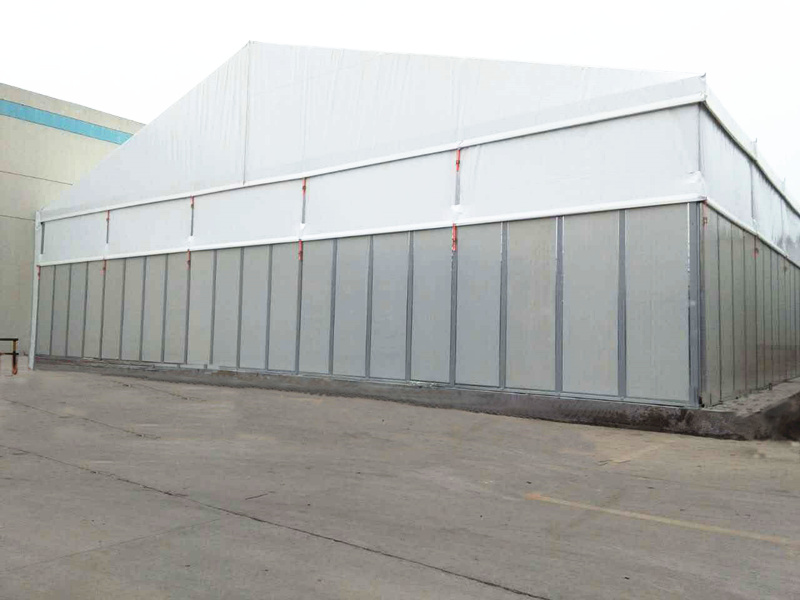
Access features matter as much as climate control. Personnel doors support daily staff movement, while overhead roll-up doors admit trucks and heavy machinery. Hard walls (sandwich panels or steel sheets) add security and insulation. Extended eave heights serve taller loads and racking systems. Color selection and custom print options finish the exterior. These choices support comfort, durability, and safety for stored goods and workers alike. The right size and configuration follow the inventory, and larger tents absorb growth in capacity and number of people more gracefully than crowded small ones.
The decision path is short enough to keep in view. Work through it in order:
Define what you are storing and set a realistic budget.
Match the shelter to weather, terrain, and site conditions.
Determine the clear span and plan access for future growth.
Compare PVC fabric coatings and aluminum frame options.
Plan setup, heavy-duty anchoring, and accessories.
A large storage tent delivers the best product for your needs when it matches actual use, not the biggest or cheapest option. Before buying a tent, confirm the available footprint, ground conditions, drainage, vehicle access, and anchoring requirements with your site in hand. A supplier can verify these details and recommend the right size and configuration for your tent.
Ready to Optimize Your Storage Space?
Don't guess your warehouse requirements. Get a free 3D design and an exact quote tailored to your site conditions, wind loads, and cargo dimensions.
Contact CY Tent Engineers for a Free QuoteFAQ
How long does a large storage tent last?
Service life depends on the cover and the use. A quality Standard PVC cover serves 8–12 years, while PVDF high-gloss covers can last 15–20 years in industrial settings. Regular anchor checks and snow removal extend the tent's working life.
Can the shelter serve both temporary and semi-permanent needs?
Yes. The tent is designed for industrial, commercial, and logistics applications. It installs and dismantles efficiently, which suits seasonal overflow. A semi-permanent setup calls for sturdier anchoring and a PVDF PVC cover built to face years of weather.
Is customization available for size and layout?
Yes. Clear span width, length, and features are customizable to specific requirements. Buyers can add personnel doors, roll-up doors, windows, skylights, vents, gutters, and hard walls. Extended eave heights serve taller racking systems. The right configuration follows the inventory and the logistics flow.
How much installation effort does the tent require?
While smaller units can be assembled manually, large-span warehouse tents require cranes and forklifts. A professional crew works through a predictable sequence. Effort drops when the site is prepared first: clear the footprint, level the ground, and confirm anchor points before the frame goes up.
What should I confirm with a supplier before buying?
Confirm the available footprint, ground conditions, drainage, vehicle access, and anchoring requirements. Bring site details to the conversation. A large storage tent supplier can verify these points and recommend the right size and configuration for the tent.