

What size tent for 150 person wedding
Planning a wedding involves countless decisions, but few are as critical as selecting the right tent size for your outdoor celebration. A 150-person wedding requires careful consideration of space, layout, and guest comfort to ensure the event runs smoothly. Whether you’re hosting a seated dinner, a cocktail-style reception, or a combination of both, understanding how to calculate the ideal tent dimensions is essential. This guide will walk you through the factors influencing tent size, provide practical examples, and help you avoid common pitfalls.
Understanding Your Space Requirements
The first step in choosing a wedding tent is determining how much space each guest needs. For a seated dinner with rectangular tables, allocate at least 8–10 square feet per person. This accounts for the table, chairs, and room to move comfortably. For a 150-person wedding, this translates to 1,200–1,500 square feet of tent space. If you opt for round tables, which typically seat fewer guests per table, you might need slightly more room—around 10–12 square feet per person—due to their wider footprint.
Cocktail-style receptions, where guests stand or mingle, require less space per person. In this case, 6–8 square feet per guest is sufficient, totaling 900–1,200 square feet for 150 attendees. However, remember that standing events often include high tables, bars, or lounge areas, which may increase your overall space needs.

Additional Space Considerations
A wedding tent isn’t just for seating—it must accommodate other essential elements. Allocate extra space for:
Dance Floor: A 16x16-foot dance floor (256 square feet) comfortably fits 50–75 guests. For 150 people, consider a 20x20-foot area (400 square feet).
Band or DJ Setup: Allow 100–200 square feet for musical equipment and performer space.
Catering and Buffet Tables: Plan for 6–8 linear feet per buffet table and additional room for servers to maneuver.
Ceremony Aisle or Altar: If the tent hosts both the ceremony and reception, add space for seating and an aisle (approximately 300–500 square feet).
Walkways and Emergency Exits: Ensure clear pathways between tables and exits, adding 10–15% to your total square footage.
For a 150-person seated dinner with a dance floor, band, and buffet, a 30x60-foot tent (1,800 square feet) is often ideal. For a cocktail-style event with lounge seating, a 40x40-foot tent (1,600 square feet) may suffice.
Tent Style and Layout Impact
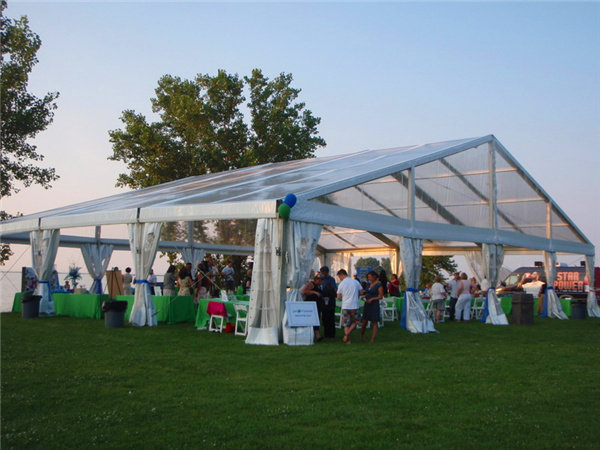
The type of wedding tent you choose also affects space efficiency. Pole tents, supported by central poles, require more room for staking and guy lines, reducing usable interior space. Frame tents, which use a skeletal structure, offer more flexibility and can be placed closer to buildings or trees. Clear-span tents, with no internal poles, maximize floor space but may cost more.
Your layout matters too. Arranging tables in rows saves space but can feel cramped. A circular or U-shaped configuration encourages flow but may require a larger tent. Always visualize the setup beforehand or use a tent sizing calculator to test different configurations.
Conclusion: The Key Role of the Wedding Tent
Selecting the right wedding tent for 150 guests hinges on balancing square footage, guest needs, and additional features like dance floors or catering areas. A well-sized wedding tent ensures comfort, safety, and a seamless flow of events, turning your outdoor celebration into an unforgettable experience. Overcrowding a small tent or paying for unused space in an oversized one are both avoidable mistakes with proper planning. By prioritizing the wedding tent’s dimensions and style, you create a versatile foundation for your special day, allowing every detail—from decorations to dining—to shine. Remember, the wedding tent is more than just shelter; it’s the canvas for your dream wedding, so choose wisely.